Monday, April 4, 2016
Sunday, April 3, 2016
[Training workshop] Brain wellness program to improve focus, memory and emotional state
A full day workshop with lawyer, IT profession, HR and mangers.
The topic is all about brain wellness and what are the ways to manage it.
Health Talk Topic:
Brain Wellness: Improve your brain wellness, focus and memory
Speakers:
Hiro Koo, Licensed Clinical Hypnotherapist
Group Activities:
1) Group stress relief session
2) Food and mood activity
3) Emotional coping technique
4) Brainwaves analysis for understanding your brain wellness status
Contact us if you are interested.
Thursday, March 31, 2016
Education and the Brain: What Happens When Children Learn?
Have you lost your house keys recently? If so, you probably applied a spot of logical thinking. You looked first in the most obvious places – bags and pockets – and then mentally retraced your steps to the point when you last used them.
Researchers looking at child development often use search-and-find tasks to look at the ways in which children apply what they are learning about the physical world. Tests carried out on toddlers reveal that something quite remarkable happens in child development between the ages of two and five – a stage identified by both educationalists and neuroscientists as critical to the capacity for learning.
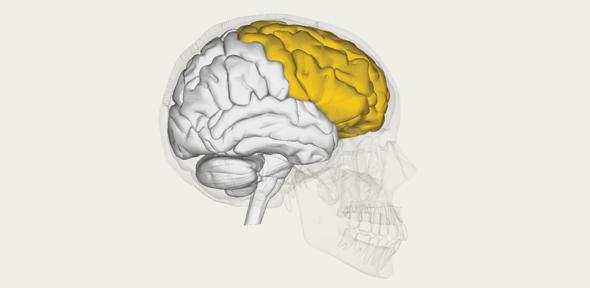
Dr Sara Baker is a researcher into early childhood at the Faculty of Education. She is interested in the role of the brain’s prefrontal lobe in how young children learn to adapt their understanding to an ever-shifting environment. Many of her studies chart changes in children’s ways of thinking about the world. She uses longitudinal designs to examine the shape of individual children’s learning curves month by month.
Research by Baker and colleagues is contributing to an understanding of the acquisition of skills essential to learning. She explains: “The brain’s frontal lobe is one of the four major divisions of the cerebral cortex. It regulates decision-making, problem-solving and behaviour. We call these functions executive skills – they are at the root of the cognitive differences between humans and other animals. My executive functions enable me to resist a slice of cake when I know I’m soon having dinner.”
In an experiment designed to identify the age at which executive skills develop, Baker and colleagues used a row of four interconnected boxes to test children’s ability to apply their knowledge of basic physics. A ball rolled down an incline entered the first box and disappeared. A barrier (its top visible) was slotted in between two of the boxes to stop the ball rolling any further. The children were asked to open the door of the box in which the ball was hidden.
Aged 29–31 months, only 32% of the children correctly identified the location of the ball by working out that the barrier would have stopped it. Aged 32–36 months, 66% of children were successful. Toddlers under the age of three appear to understand the principles of solidity and continuity, but have trouble acting on this knowledge. A single month in a child’s age affected their ability to carry out the task correctly.
Baker’s interest in children’s development of executive skills dates from the moment a decade ago when she picked up a picture book while sitting in the foyer of a nursery school; the narrative focused on opposites: big/small, light/dark, hot/cold. How would children respond if they were asked to point to the opposite picture to the one depicting the word they heard spoken? This question became the topic for her PhD. Her findings confirmed that the huge variability of children’s executive skills could explain the range of social and cognitive behaviours we see emerging in the early years. What we learn at this stage, and what we learn to apply, sets us on course for life.
Most three-year-olds find the ‘opposites’ task hard. Given two pictures of bears, one big, one small, they automatically point to the big bear when they hear the word ‘big’ spoken aloud. They point to the big bear even when they have been asked (and appear to have understood) to point to the image that is the opposite of the word they hear.
Five-year-olds are much more successful in carrying out the task explained to them. “By age five, most children have acquired the ability to override their impulses, and put them on hold, in order to follow a request,” says Baker. “The ability to control impulses is vital to children’s socialisation, their ability to share and work in groups – and ultimately to be adaptable and well adjusted.”
What happens in children’s brains and minds to enable them to make these important leaps in understanding? The answer involves an understanding of neuroscience as well as child development. Baker and colleagues are engaged in multidisciplinary projects including examining how individuals with autism may perceive and learn about the physical world differently from those without a diagnosis. Her team is also developing a pedagogical, play-based approach in collaboration with teachers.
“Executive function is a hot topic in education. When we talk to teachers about the psychology behind frontal lobe development, they immediately recognise how important self-regulation is, and will tell you about the child who can’t concentrate. It might be the case that this child is struggling with their executive functions: their working memory or inhibitory control might be flagging,” says Baker.
“The tricky part is to grasp the processes developing in the child’s brain and come up with ways to encourage that development. In early years’ education, playful learning and giving children freedom to explore could help to encourage independence as well as the ability to know when to ask for help, both of which depend on self-regulatory skills. If we want to encourage adaptability and self-reliance, we have to look beyond the formal curriculum.”
Baker’s research into children’s ability to apply knowledge to successfully predict the location of an object hidden from view revealed much more than simply which age group was successful. She says: “In looking at the data from tasks, it’s not enough to focus only on children’s failures. We need to look at why they search for an object in a particular place. Often they’re applying something else that they’ve learnt.”
When younger children opened the same door twice in the boxes experiment, despite the barrier having been moved, they were applying logic: an object may be precisely where it was found before. After all, it’s always worth looking for the house keys first where they should be.
In another experiment (involving dropping balls into opaque tubes that crossed each other), the younger children applied their knowledge of gravity (the ball would fall down the tube) but failed to take into account that the tubes were not straight. Baker says: “When children repeat a mistake, they reveal something about their view of the world and, as researchers, we learn how their brain is developing. As teachers and parents, our role is to help children to overcome that strong, but wrong, impulse.”
During the course of a day, your frontal lobe will have enabled you to do far more than find your keys. The synaptic firing of millions of cells in your brain may have guided you through a tricky situation with colleagues or prompted you to make a split-second decision as you crossed a busy road. “The development of this vital area of your brain happened well before you started formal education and will continue throughout your lifetime,” says Baker.
Source:
Friday, March 25, 2016
Wednesday, March 23, 2016
SLEEP MANAGEMENT MALAYSIA
How can someone measure his/her sleeping quality?
How important water is for our daily living, sleep is equally as important to rejuvenate our body. Imagine yourself not having a quality sleep can have an impact on your performance the next day at work, the reason is sleep deprivation which to large extent affects our prefrontal cortex. The prefrontal cortex is just like the cream on our cakes located front of the brain just behind the forehead, in charge of abstract thinking and thought analysis, it is also responsible for regulating behavior. This includes mediating conflicting thoughts, making choices between right and wrong, and predicting the probable outcomes of actions or events. It acts as a filter to prevent oneself from irrelevant information interfering the task on hand.
With years of experience in this field, I have analyzed quite a number of brain waves using EEG Bio feedback at SOL, in most cases clients with sleep issue often lack in focus and have higher tendency to become restless. E.g. even for young kids with excessive slow brain waves on the prefrontal cortex tend to suffer from attention deficit, hyperactive behavior which is not very surprising because at the end of the day I often check with the parents on their sleeping patterns and there it goes.
Sometimes craving for sweet or high carbohydrate diet such as rice, noodles can be result of insufficient sleep, this is due to sleep deprivation that disrupts your body function which is responsible for regulating your appetite and research have proven.
I would like to share my experience in helping a client, Juliet to manage her sleeping problems and issues caused by sleep deprivation.
Finding it difficult to stay focused and remain calm
“Juliet is a corporate executive, and recently she was bothered by some health concerns which worried her so much that she sought help from us. She was losing focus in her work and experiencing fatigue very frequently. She did not take these signs seriously until one day she passed out in her office. Initially, she thought she was having autonomic nervous system dysfunction as she experienced symptoms such as excessive fatigue, blood pressure fluctuations, rapid heart rate, dizziness and digestive problem.Autonomic nervous system dysfunction generally involves impairment of the sympathetic or parasympathetic components of our autonomic nervous system. The sympathetic nervous system functions like a gas pedal in a car. It triggers the fight-or-flight response, giving the body a burst of energy to respond to perceived dangers. The parasympathetic nervous system acts like a brake. It arouses the “rest and digest” response that can calm the body down after the danger has passed. Just imagine that, if your brake and gas pedal is not working accordingly? You might experience symptoms similar to Juliet’s or even worst.
Juliet had undergone a health assessment in our centre and the result showed that the main issue in Juliet is not the autonomic nervous system dysfunction but related to her sleeping quality and quantity. To find out more about her concern, a brainwave assessment was conducted on her. According to the result, it showed that there are excessive slow brainwaves on her prefrontal cortex which would lead to impairment on her executive functioning. This is the major reason why she was having focus problem, poor mental stamina, short attention span and related issue. Scientific studies have shown that sleep deprivation would bring negative impacts on brain regions like memory and emotions causing development of anxiety related issue. Therefore, Juliet was having anxiety symptoms like indigestion, rapid heart rate and dizziness issue as well.
Solutions to end her daily-struggles
Issues related to Juliet’s sleep deprivation have affected her work performance and daily activities. To help her effectively improve her sleeping quality, Brain Trainer, the non-drug, evidence - based EEG Biofeedback therapy and Neuro-hypnotherapy are suggested to her. Sleeping pills are not recommended as sleeping pills may only improve the duration and quantity of sleep but not the quality of sleep in long run. Juliet was feeling better and her sleeping quality has improved remarkably after completing the program. Besides, a good sleep at night has brought down her anxiety level.
Apart from the cutting-edge therapies, some sleep hygiene tips were given to help her sleep better. For example, stop using her phone at least 30 minutes before bed and reduce her coffee intake or any beverage containing caffeine after 2pm. Moreover, Juliet needs to monitor herself that she needs at least 8 hours of sleep every day instead of 6 hours which previously she thought it is enough for her. Sometimes she is having insomnia, then she would need to practice self-hypnosis techniques tailored for her and shortly, she will be able to fall asleep easily. Juliet’s ability to focus has improved and interestingly, she lost about 5kgs in just 3-month time without any strict diet plan! The reason of her weight loss is simply because she has better sleep quality now.
What is neuro-hypnotherapy and EEG biofeedback therapy?
Researchers at Harvard University found that hypnotherapy actually promotes faster healing. Many insomniacs have tried this intervention with great success. Under hypnosis, you might work out any personal issues that are robbing you of sleep. A clinical hypnotherapist can also "program" you to sleep. Our neuro-hypnotherapy technique is first of its kind in Malaysia which is able to help you to improve your sleep quality. Personalized self-hypnosis method to fall asleep will be developed based on your brainwave response.
EEG biofeedback or brain trainer is based on the international standardized 10-20 electrode location system. It is essentially a way of teaching you how to self-regulate your own electrical activity in the brain and strengthen your sleep spindle activity indirectly. A powerful tool for helping people fall asleep and stay asleep. People who produce more frequent or greater amounts of sleep spindles than the average person require a higher decibel noise level to be roused out of a sound sleep. As we age, we produce fewer spindles and are more sensitive to noises around us. This can be one of the explanations why older people don't seem to sleep as well.
So are you getting at least 7 hours of sleep? Do you wake up feeling refreshed? If not, contact your healthcare provider as soon as possible.
Author:
Hiro Koo
Wednesday, March 16, 2016
NKF Open Day & Exhibition conjunction with World Kidney Day 2016
Our EEG biofeedback device was hooked up to a client's brain in order to read and scan brain activity. It is completely safe, non invavise, painless and no side effect. 

We have been invited to give the stress analysis (EEG brainwaves analysis) for the particpants. Special thanks to the National Kidney Foundation (NKF) Malaysia for the invitation.
Wednesday, March 9, 2016
How to Get the Most out of Your Daily Coffee (and Caffeine)
We prize coffee as much for its caffeine jolt as for its rich taste and enticing aroma. The right amount of caffeine at the right time can boost your alertness,memory, and attention. But overindulge, and you may pay the price with insomnia, headaches, and even caffeine jitters.
Experts say the upper limit for healthy caffeine consumption is 300 to 400 mg per day for a typical adult. That’s a max of three to four eight-ounce cups of coffee daily—or two to three cups, if you also consume caffeine from other sources, such as tea, chocolate and over-the-counter cold medicine. Some individuals—such as pregnant or breastfeeding women,(link is external) and those especially sensitive to caffeine—need to aim even lower.
The good news: You can get the mental perks of coffee without overdoing the caffeine. The key is making every cup count. And one of the best ways to do that is to carefully choose when to partake.
Late Morning: 10:00 to 11:00 a.m.
One rationale for a late-morning coffee, which neuroscientist Steven Miller advances, is based on circadian fluctuations(link is external) in cortisol. This hormone naturally makes you feel awake and alert. In general, cortisol production(link is external) peaks between 8:00 and 9:00 a.m. After that, cortisol levels fall for a while, then rise again to a smaller peak around lunchtime. Physiologically speaking, there’s little you can gain by consuming caffeine when cortisol levels are high. Your brain is already at its peak natural alertness, so this is the time when it needs caffeine least. It makes more sense to take a coffee break when cortisol levels are lower, like during the late-morning dip.
At this time of day, the psychological benefits of a cup of coffee include:
Alertness
Caffeine triggers the release of adrenaline, which amps up alertness. A little adrenaline rush might be just what you need to make it to lunchtime. One caveat: Avoid overindulging. At high doses, caffeine may cause a faster heart rate and breathing rate; sweating, nervousness, shakiness, nausea, and diarrhea. And once your body develops a dependence on caffeine, withdrawal may lead to headache, fatigue, sleepiness, and bad mood.
Memory
There’s growing evidence that moderate amounts of caffeine may enhance certain aspects of memory. That could come in handy if you’ve spent your morning reading a report, sitting in a seminar, or otherwise learning something new. In one randomized, double-blind study(link is external) by Johns Hopkins researchers, participants tried to memorize a series of images. Immediately afterward, they received a pill containing either 200 mg of caffeine or a placebo.The next day, the researchers tested participants' ability to recognize the images. In this test, some images were identical to ones from the day before, some were similar, and some were totally different. Those in the caffeine group did better than those in the control group at correctly identifying similar images as such, rather than mistakenly thinking they were the same. It seemed that caffeine had fine-tuned their memory.
Early Afternoon: 1:30 to 2:00 p.m.
After reaching a mini-peak between noon and 1:00 p.m., cortisol levels start dropping again, then rebound with another small spike between 5:30 and 6:30 p.m. But you don’t want to consume caffeine too late in the day, because it may still be affecting you at bedtime. So if you choose to have a post-lunch coffee break, early afternoon is the best time to do it.
At this time of day, the psychological benefits of a mug of java include:
Wakefulness
Caffeine prevents a brain chemical called adenosine from binding to its receptors. When adenosine binds to these receptors, the result is a sleepy feeling. By blocking this action, caffeine helps fend off post-lunch drowsiness, a common occurrence that tends to be worst around 2:00 p.m(link is external). Caffeine starts working quickly and reaches its full effect within 30 to 60 minutes. So a zap of caffeine around 1:30 p.m. is well-timed to combat an afternoon energy slump. Of course, another time-honored way to recharge is by taking a short catnap. A little caffeine right before you doze off may help you wake up in 20 minutes or so, without oversleeping or ending up feeling groggy.
Attention
If your attention wanders in the afternoon, that could lead to regrettable mistakes and even serious accidents. Research(link is external) shows that a moderate amount of caffeine may increase accuracy on tasks that require paying attention. It may also speed up reaction times and lead to faster learning of new information. A caveat: Avoid coffee later in the afternoon and evening. It takes three-to-five hours for half the caffeine to exit your system, and eight-to-14 hours to eliminate all of it. If you’re still caffeinated at bedtime, you may have trouble falling asleep. And caffeine too close to bedtime may reduce deep sleep and total sleep time.
What About Early Morning?
Many people treasure spending quiet moments with a favorite coffee mug early in the morning. It’s a comforting routine. And it can easily become an exercise in mindfulness as you focus on the delicious sensations of flavor, aroma and warmth. (Of course, if you want to savor the ritual without the caffeine, you could always substitute caffeine-free herbal tea.)
An early-morning cup of coffee may wake up your brain in another way as well: Even if an 8:00 a.m. coffee isn’t actually giving you much added benefit because your cortisol is peaking, you might feel more alert simply because that’s what you expect. Research(link is external)shows that many people believe coffee gives them the sustained mental energy they require to power through a series of mentally challenging tasks. Those first few hours of the day can seem pretty daunting. If coffee gives you more confidence in your ability to handle them, that might be reason enough to pour a cup.
Source:
https://www.psychologytoday.com/blog/minding-the-body/201602/how-get-the-most-out-your-daily-coffee-and-caffeine?utm_source=FacebookPost&utm_medium=FBPost&utm_campaign=FBPost
Saturday, March 5, 2016
No brain, no pain: Hypnosis can replace anesthesia in brain surgery
For many people, the idea of being awake while your skull is cut open sounds like something straight out of a horror movie. However, 37 people decided to forgo anesthetics for brain surgery and opted to receive hypnosis instead.
Hypnosis in surgery is not a new concept. In 1864 a Scottish surgeon named James Esdaile reported “80 percent surgical anesthesia using hypnosis as the sole anesthetic for amputations in India,” according to the Journal of the National Cancer Institute. In 1957, Dr. William Saul Kroger caught the New York Time’s attention when he used hypnosis on a breast cancer patient, the Miami Herald reported.
However, Dr. Ilyess Zemmoura of Centre Hospitalier Universitaire de Tours and his colleagues have been evaluating the effects of using anesthesia since 2011. Focusing primarily on brain cancer patients, he and his team have been conducting awake operations to remove brain cancer tumors.
Certain brain operations require patients to be awake for at least part of the process. These surgeries are very tricky, according to the International Business Times, and surgeons depend on certain responses and interactions to avoid damaging critical parts of the brain, such as the eloquent cortex.
Typically when a patient undergoes brain surgery, they will be put to sleep at the beginning of the operation prior to the skull being opened, woken up in the middle to ensure responses are normal, then put back to sleep again. This process is known as asleep-awake-asleep ‒ or AAA – which seems like an onomatopoeia when thinking about waking up in the middle of brain surgery.
Zemmoura and other researchers detailed the hypnosis process to a total of 48 patients, according to Ars Technica. Hypnosis sedation, much like AAA sedation, begins several weeks prior to the operation. The patient meets with a hypnotist to practice entering a trance. From 2011 to 2015, 37 of the 48 underwent brain surgery using hypnosis sedation. Six patients were unable to enter a trance at the time of the surgery and switched to AAA sedation.
While the drawbacks to hypnotherapy may seem obvious ‒ waking up out of the trance, pain, sneezing while a surgeon has their hands on your brain ‒ there are many benefits as well. The Journal of the National Cancer Institute estimated that the use of hypnosis could save both time and up to $338 per procedure.
Although some in the medical community remain skeptical – there was no control group in the study to compare results with – Zemmoura’s small patient group largely reported positive results. Follow-up questionnaires showed little to no negative psychological impact, Neuroscience News reported.
Source:
https://www.rt.com/usa/328137-brain-surgery-hypnosis-anesthetic/
Thursday, March 3, 2016
Is There A Connection Between Sleep And Depression?
Introduction
Is your sleep routine off? Are you sleeping less than normal? Are you depressed? Are you wondering if there is a connection between your irregular sleep pattern and your depressed mood? Well, keep reading this article because the answer is yes. There indeed is a relationship between sleep and depression. According to the National Sleep Foundation (2016), “The relationship between sleep and depressive illness is complex – depression may cause sleep problems and sleep problems may cause or contribute to depressive disorders. For some people, symptoms of depression occur before the onset of sleep problems. For others, sleep problems appear first. Sleep problems and depression may also share risk factors and biological features and the two conditions may respond to some of the same treatment strategies. Sleep problems are also associated with more severe depressive illness.” For the purposes of this article, we will focus on how irregular sleeping patterns result in the development of a depressive mood.
There Is a Relationship Between Insomnia And Depression
According to http://healthysleep.med.harvard.edu/need-sleep/whats-in-it-for-you/mood, “Chronic insomnia may increase the risk of developing a mood disorder, such as depression.” Think about it. If you are tired and have not gotten a good night sleep, you are going to have a lack of energy in your daily routine. This, in return, is going to impact your mood. You are going to feel depressed. This is supported by evidence. According to http://healthysleep.med.harvard.edu/need-sleep/whats-in-it-for-you/mood, “In one major study of 10,000 adults, people with insomnia were five times more likely to develop depression.” In addition, http://healthysleep.med.harvard.edu/need-sleep/whats-in-it-for-you/mood indicates that “Difficulty sleeping is sometimes the first symptom of depression. Studies have found that 15 to 20 percent of people diagnosed with insomnia will develop major depression.”
What Can Be Done?
You may be wondering if you are depressed, how can you improve your sleep? Well the answer is quite simple. Set a regular sleep routine. Have a set time for going to sleep and a set time for waking up in the morning. On an even further note, do not even think about hitting the snooze button. Just don’t hit it. You will feel better when you don’t touch it. Trust me on this one.
Conclusion
Despite the relationship between sleep and and a depressed mood, you can still feel better about yourself and lead a healthy lifestyle. Just start by adjusting your sleep routine. You will see the difference in how you feel in no time.
Source:
http://blogs.psychcentral.com/coping-depression/2016/02/is-there-a-connection-between-sleep-and-depression/
Wednesday, March 2, 2016
Tourette Syndrome Treatment in Malaysia - EEG biofeedback/Neurofeedback
Gilles de la Tourette syndrome (TS) is characterized by motor and vocal tic manifestations, often accompanied by behavioral, cognitive and affective dysfunctions.
Electroencephalography of patients with TS has revealed reduced Sensorimotor Rhythm (SMR) and excessive fronto-central Theta activity, that presumably underlie motor and cognitive disturbances in TS.
Some evidence exists that EEG biofeedback or neurofeedback (NFB) training aimed at enhancing SMR amplitude is effective for reducing tics. The present report is an uncontrolled single case study where a NFB training protocol, involving combined SMR uptraining/Theta downtraining was delivered to a 17-year-old male with TS.
After sixteen SMR-Theta sessions, six additional sessions were administered with SMR uptraining alone. SMR increase was better obtained when SMR uptraining was administered alone, whereas Theta decrease was observed after both trainings.
The patient showed a reduction of tics and affective symptoms, and improvement of cognitive performance after both trainings.
Overall, these findings suggest that Theta decrease might account for some clinical effects seen in conjunction with SMR uptraining. Future studies should clarify the feasibility of NFB protocols for patients with TS beyond SMR uptraining alone.
Source:
https://www.researchgate.net/publication/51641932_Neurofeedback_Training_for_Tourette_Syndrome_An_Uncontrolled_Single_Case_Study
Electroencephalography of patients with TS has revealed reduced Sensorimotor Rhythm (SMR) and excessive fronto-central Theta activity, that presumably underlie motor and cognitive disturbances in TS.
Some evidence exists that EEG biofeedback or neurofeedback (NFB) training aimed at enhancing SMR amplitude is effective for reducing tics. The present report is an uncontrolled single case study where a NFB training protocol, involving combined SMR uptraining/Theta downtraining was delivered to a 17-year-old male with TS.
After sixteen SMR-Theta sessions, six additional sessions were administered with SMR uptraining alone. SMR increase was better obtained when SMR uptraining was administered alone, whereas Theta decrease was observed after both trainings.
The patient showed a reduction of tics and affective symptoms, and improvement of cognitive performance after both trainings.
Overall, these findings suggest that Theta decrease might account for some clinical effects seen in conjunction with SMR uptraining. Future studies should clarify the feasibility of NFB protocols for patients with TS beyond SMR uptraining alone.
Source:
https://www.researchgate.net/publication/51641932_Neurofeedback_Training_for_Tourette_Syndrome_An_Uncontrolled_Single_Case_Study
Friday, February 26, 2016
First neural evidence for the unconscious thought process
Hemingway (1964/2010) describes a process that people who engage in creative pursuits from time to time recognize. While you are engaged in one thing—say a conversation with friends—consciously, something that you had been working on beforehand is still simmering unconsciously. At times the simmering is quite vigorous, and the repeating conscious intrusions can make it difficult to fully concentrate on your current activity—talking to your friends.
The idea of that incubation or unconscious thought can aid creativity or problem solving is old (Schopenhauer, 1851), and 10 years ago, we started to link the process of unconsious thought to decision making in a series of experiments (Dijksterhuis, 2004; Dijksterhuis and Nordgren, 2006;Dijksterhuis et al., 2006). The idea was based on two considerations. The first was that it is quite a small step from problem solving to decision making and the second was that the process of unconscious thought as described in the first paragraph can often be sensed, introspectively, when one is in the process of making an important decision such as buying a house or choosing between one’s job and a job offer for a new one.
In our initial experiments, we gave participants the task to choose between four alternatives (houses, cars, roommates, etc.) on the basis of a number of aspects (often 12 per alternative). Participants either decided immediately after reading the decision information, or after a period of conscious thought, or after a period of distraction during which unconscious thought was assumed to take place. In our early experiments, unconscious thinkers made better decisions than participants in the other two conditions. We initially called this the deliberation without attention effect; however, now we prefer the term unconscious thought effect (UTE).
These initial findings led a number of colleagues to also investigate the relation between unconscious thought and decision making and, looking back now at 10 years of unconscious thought research, the research seems to have revolved around two questions. The first is whether unconscious thought indeed leads to better decisions that conscious thought or no thought, the second is whether unconscious thought really exists in the first place (and if so, what exactly is it)? The contribution by Creswell et al. (2013) constitutes a major step towards answering the second question, so I focus briefly on the first before devoting the remainder of this introduction to the second and to the work by Creswellet al.
Does unconscious thought lead to better decisions? As such things tend to go, 10 years of research has led to a rather predictable answer: Probably, but only under some circumstances. The paradigm we developed turned out to be much more fragile than we had hoped, and although the UTE has been replicated independently in well over dozen laboratories, at least equally often people did not obtain any evidence for improved decision making after unconscious thought. Some individual papers, as well as a recent meta-analysis (Strick et al., 2011), identified a number of moderators. It seems that unconsious thought is beneficial when decisions are based on a lot rather than on little information, when the decision information is presented blocked by decision alternative rather than completely randomized, when the distraction task is not too cognitively taxing, and when the decision information contains visual stimuli in addition to verbal stimuli. It is encouranging for proponents of the work on unconscious thought that unconscious thoughts seem to be more fruitful when the experimental set-up becomes more ecologically valid.
That being said, some people have argued that unconscious thought does not really exist in the first place. People may make better decisions after being distracted, but that does not yet mean that any decision related mental activity took place while they were distracted. Some have proposed, for instance, that participants in unconscious thought conditions form an impression of the decision alternatives online—that is, while they read the decision information—and later simply retrieve this information. These participants may perform better than conscious thinkers, because under some circumstances, conscious thought can actually hamper decision making. Although it is indeed very likely that a reasonable proportion of participants in some unconscious thought experiments indeed merely retrieved online impression (which, by the way, can be prevented by presenting the stimulus materials rapidly), this cannot explain why unconscious thinkers also often outperform immediate decision makers (Strick et al., 2010), something that has been curiously overlooked when this alternative explanation was first published. However, there is also evidence that people who are not given the goal to make a decision before they are distracted make worse decisions than people who do have the goal (Bos et al., 2008), and this rules out this alternative explanation even more effectively. Unconscious thought is a goal-directed unconscious process, and merely distracting people does not do anything.
The experiment by Creswell et al.—in which they provide the first neural evidence for the UTE—also provides strong evidence for the unconscious thought process. They indeed found that unconscious thinkers made better decisions than conscious thinkers and than immediate decision makers. More importantly, they compared neural activity among people who were thinking unconsciously while they were engaged in a distraction task with the neural activity of people doing this same distraction task without engaging in unconscious thought. They found evidence forreactivation. The same regions that were active while people encoded the decision information—the right dorsolateral prefrontal cortex and left intermediate visual cortex—were active during unconscious thought. Moreover, the degree of neural reactivation differed between participants and was predictive of the quality of the decision after unconscious thought.
This is a breakthrough in unconscious thought research, and, quite appropriately in a celebratory sort of way, published almost exactly 10 years after the first experiments with the unconscious thought paradigm. Again, Creswell et al. provide the first neural evidence, and thereby—in my view at least—unambiguous evidence for the unconscious thought process. Finally, they also provide insight into the characteristics of the unconscious thought process.
Althought some aspects of the unconscious thought process can be carefully deduced from moderators, direct process-oriented evidence is scarce. Unconscious thought leads the representations of the decision alternatives in memory to become better organized and more polarized (Dijksterhuis, 2004; Bos et al., 2011) and interestingly, a recent paper shows that unconscious thinkers rely more on gist memory than on verbatim memory (Abadie et al., in press) thereby also integrating fuzzy-trace theory (e.g. Reyna and Brainerd, 1995) and unconscious thought theory. The reactivation account by Creswell et al. is fully in line with these earier findings, as earlier work on reactivation has repeatedly found (for references see the article by Creswell et al.) that reactivation improves memory and learning processes.
The work by Creswell and colleagues constitues a vital step forwards. The combined evidence now suggests that unconscious thought is a goal-directed process of neural reactivation during which memory representations of—in this case decision alternatives—change.
- © The Author (2013). Published by Oxford University Press. For Permissions, please email: [email protected]
Source: http://scan.oxfordjournals.org/content/8/8/845.full
Saturday, February 20, 2016
马来西亚妥瑞症治疗Non-drug therapy for Tics/Tourette syndrome
妥瑞氏症 (Tourette Syndrome)
妥瑞氏症也稱妥瑞氏綜合症,患者會有不自主重複性動作的癥狀,表現在臉部、手部或腳部可觀察的小肌肉規律性抽動,以及額頭、眼尾、鼻子、嘴部肌肉群的區塊抽動。重症者會出現頭部、頸部、肩膀、身體、腳部的上下前後扭動,以至二個手臂連接整個上半身的大擺動,再結合從小聲至大聲的囈語或穢語。抽動的範圍愈大,時間愈久、次數愈頻繁,顯示癥狀愈為嚴重,反之則癥狀愈為緩解。
妥瑞氏症簡介 妥瑞氏症也稱妥瑞氏綜合症、吐雷氏症、吐雷氏綜合症。此症是法國妥瑞(last nameJean-Nartub Charcot ,first name Gillies de la Tourette)醫生於1885年提出的8個病例報告。此種患童會不自主動作,包括抽搐、眨眼睛、噘嘴巴、裝鬼臉、臉部扭曲、聳肩膀、搖頭晃腦;及不自主出聲,包括清喉嚨、大叫或發類似「干」的怪聲。約有百分之五十的患者會伴有注意力缺陷過動症。
症状 聲語上的抽搐(Vocal Tics) 聲語型抽筋可說是妥瑞氏症最為人所知的癥狀。聲語型抽筋包含廣泛,從單純的清喉嚨,擤鼻涕,發出象豬的咕嚕聲,狗叫聲,到突然說一些詞語或發出無意義的聲音。絕大多數的人以為妥瑞氏症患者會突然口出穢言。事實上,大約只有15%的妥瑞氏症病例會出現這種情形。如同運作型抽筋,聲語型抽筋的嚴重程度是變動的,且形式經常改變(譬如說,從發出象豬的呼嚕聲到說一些話語),癥狀隨著狀況不同時好時壞。 聲語型抽筋可分為簡單型以及複雜型。簡單型聲語抽筋包括發出一些簡單的聲響象是清喉嚨或是擤鼻涕。複雜型的聲語抽筋則包括任何言語,連猥褻的言詞也囊括其中;重複別人的話;或是反覆喃喃自語。
動作上的抽搐(Motor Tics) 動作型抽筋是一些不自主的運動,通常發生於臉和脖子的肌肉。這些不自主的運動包括聳肩,眨眼,以及擤鼻子。當手臂伸展,踢腿或跳躍時,身體其他部位也參與其中。動作型抽筋通常發生於身體的同一部位,但是隨著時間的過去,抽筋的現象可能從一部份消逝而在另一個部位又冒出來。
動作型抽筋可以分為簡單型以及複雜型。 簡單型抽筋是突發的、短暫動作,它通常的發作模式是一次只有單一一個位置的肌肉抽筋。象是眨眼、聳肩或是搖頭晃腦都是簡單型動作抽筋的例子。 複雜型抽筋則是一連串的動作。看起來好象是有目的,象是那個人刻意有那些舉動,但實際上他們是不自主的做了那些動作。 舉例來說,複雜型抽筋可能是聞東西(它包含了把東西拿起來,將物體靠近鼻子,聞一聞,然後放下)或是模仿別人的動作(稱為仿作"echopraxia")。 這些舉動很可能被解釋成是患者刻意作出來的。但有一些複雜型抽筋看起來並非刻意而為,象是反覆的踢腿或是搖頭聳肩。 感覺上或心理上的抽搐 大部分的妥瑞氏症兒童都有出現癥狀的前兆,譬如:眼皮酸而眨眼睛,脖子酸而搖頭聳肩,通常是抽搐前兆。也有單獨的燒灼感、緊繃感、肌肉緊張、疼痛。甚至於覺得別人搔癢而去抓人,也有在心理說粗話或重複說一樣的話妥瑞氏兒童在專心於某一行為時(例如:談鋼琴、看錄像帶、玩電動遊樂器、看漫畫書等)抽搐常會消失,熟睡或酒後多半癥狀也會消失;相反地,壓力疲憊無聊及興奮時,會明顯加重抽搐的頻率與強度。 伴隨癥狀過動、注意力不集中(ADHD)及強迫症。根據葉啟斌醫師的說法約有40%的妥瑞氏症兒童有強迫症。Deputy( 2002)表示:至少有五分之一的妥瑞氏症兒童伴隨有注意力缺陷過動症(ADHD)。
病因
過度敏感反應 目前所知的病因是腦基底核的多巴胺過度敏感反應,及腦基底核與腦皮質之間的聯繫出現問題,導致出現慢性、反覆、半不自主的動作及聲語上的抽搐(tic)。約50-70%的妥瑞兒與遺傳有關。 與鏈球菌感染有關 根據國外的研究約有四成的妥瑞氏症兒童與鏈球菌感染有關。妥瑞氏症可能與紅斑性狼瘡一樣,是一種自體免疫疾病,鏈球菌感染是危險因子。有妥瑞氏症家族史及體內B型淋巴結免疫缺損的孩童應盡量避免感染鏈球菌。 感冒對神經傳導物質多巴胺也會有所破壞,造成多巴胺不足而導致妥瑞氏症及帕金森症。
其它環境因素 環境因素如有毒物質、心理興奮劑、過敏原、食品等。
發病人群 妥瑞氏症在所有人種皆可見。 妥瑞氏症的病徵通常在18歲之前出現,在7 歲半左右發作。 男性妥瑞氏症的發生率比女性高三到四倍。
诊断 雖然說並無法使用單一一個測驗即可檢測出一個人是否罹患妥瑞氏症,但是某些檢驗,例如:MRI,CT,EEG 以及血液測試皆可幫助醫師將癥狀與妥瑞氏症類似的疾病排除。假如受檢對象在其他的檢查的結果都是陰性的,而此人長期以來一直有多重的動作型或聲語型抽筋,癥狀持續超過一年以上,則可以做出此人為妥瑞氏症患者之臨床診斷。
治療 妥瑞氏症的心理治療分成二個階段,分別處理癥狀與癥狀造成的影響。
第一階段是抽動動作、行為的矯治,以及腦部異常放電之腦電波心身回饋治療。
第二階段是偏差行為矯治、人格重建以及深度心理治療。 父母親的協助以及當事人意志力的激發,是治療妥瑞氏症最重要的助力。若無家屬和患者的全力配合,通常心理治療作業都會中斷無法建構療程與療效。
对于妥瑞症的治疗,Newmindcentre.com的治疗师和医师们提供以下服务:
1) 了解病因:检测环境因素
Nutritional therapy合格的营养咨询师将教导您使用食物保養神經的作用穩定 大腦中有許多神經細胞,靠神經傳導物質當「傳令兵」,幫忙傳達指令,身體各部位一收到訊息,就會有所反應。 神經傳導物質有上百種,其中和情緒、壓力有關的包括多巴胺、正腎上腺素、血清素等。好消息是,一些食物可以增加神經傳導物質的濃度,維持神經的作用穩定,不妨適量攝取。营养咨询师可透过头发重金属检测Hair Tissue Mineral Analysis (HTMA)的方法了解环境因素,对症下药了解身体里超标的有毒物质并改变您的饮食,从而帮助您改善身心状态。重金屬藉由飲食、呼吸或是直接接觸方式進入人體,但重金屬不似其他毒素能在肝臟進行分解代謝後排出體外。相對的,它非常容易囤積在大腦、腎臟等器官,漸進式破壞身體的正常功能。簡單、精確、無侵入性的重金屬檢測幫助您提早發現不正常警訊和預防疾病發生。近代學術研究發現,近頭皮的頭髮所含之元素與體內之元素有密切的相關性,並且有強大的學術支持,這些由頭髮檢測之元素即代表體內的元素含量,其中包括了有毒金屬及營養性元素。因頭髮之分析檢測比血液檢測更加的靈敏,可發揮提早發現不正常警訊及與防疾病之優點。
2) 第一階段治疗:抽動動作、行為的矯治(Habit Reversal Therapy)与腦電波心身回饋治療(EEG biofeedback/Neurofeedback)
我们拥有在马来西亚极少数受过合格脑电波心身回馈治疗与拥有丰富临床经验的治疗师。治疗师除了提供科学,安全无痛又无副作用的脑电波心身回馈治疗,也会教导客户如何使用Habit Reversal Therapy等对抽動動作、行為的矯治疗法。
3)第二階段治疗:偏差行為矯治、人格重建以及深度心理治療(Psychotherapy and Neuro-hypnotherapy)。
我们拥有执业临床催眠师,可以透过临床催眠疗法除了可以减轻妥瑞症的症状,也能帮助客户进行偏差行为矫正,情绪与心理治疗以帮助客户进行完善的人格重建。我们所使用的脑电波心身回馈治疗也专门设计了针对客户的智力与情绪进行正面的调整功能。
4) 提供客户的亲属适当的心理建设Psychoeducation
我们提供父母或亲属适当的心理建设与应对措施,让他们了解如何与病患相处。同时也可以和家属亲人一起探讨对策,帮助病患一起面对来自学校,工作以及社会所给予的压力与不平等对待。
资料来源: http://www.twwiki.com/wiki/%E5%A6%A5%E7%91%9E%E6%B0%8F%E7%97%87
妥瑞氏症也稱妥瑞氏綜合症,患者會有不自主重複性動作的癥狀,表現在臉部、手部或腳部可觀察的小肌肉規律性抽動,以及額頭、眼尾、鼻子、嘴部肌肉群的區塊抽動。重症者會出現頭部、頸部、肩膀、身體、腳部的上下前後扭動,以至二個手臂連接整個上半身的大擺動,再結合從小聲至大聲的囈語或穢語。抽動的範圍愈大,時間愈久、次數愈頻繁,顯示癥狀愈為嚴重,反之則癥狀愈為緩解。
妥瑞氏症簡介 妥瑞氏症也稱妥瑞氏綜合症、吐雷氏症、吐雷氏綜合症。此症是法國妥瑞(last nameJean-Nartub Charcot ,first name Gillies de la Tourette)醫生於1885年提出的8個病例報告。此種患童會不自主動作,包括抽搐、眨眼睛、噘嘴巴、裝鬼臉、臉部扭曲、聳肩膀、搖頭晃腦;及不自主出聲,包括清喉嚨、大叫或發類似「干」的怪聲。約有百分之五十的患者會伴有注意力缺陷過動症。
症状 聲語上的抽搐(Vocal Tics) 聲語型抽筋可說是妥瑞氏症最為人所知的癥狀。聲語型抽筋包含廣泛,從單純的清喉嚨,擤鼻涕,發出象豬的咕嚕聲,狗叫聲,到突然說一些詞語或發出無意義的聲音。絕大多數的人以為妥瑞氏症患者會突然口出穢言。事實上,大約只有15%的妥瑞氏症病例會出現這種情形。如同運作型抽筋,聲語型抽筋的嚴重程度是變動的,且形式經常改變(譬如說,從發出象豬的呼嚕聲到說一些話語),癥狀隨著狀況不同時好時壞。 聲語型抽筋可分為簡單型以及複雜型。簡單型聲語抽筋包括發出一些簡單的聲響象是清喉嚨或是擤鼻涕。複雜型的聲語抽筋則包括任何言語,連猥褻的言詞也囊括其中;重複別人的話;或是反覆喃喃自語。
動作上的抽搐(Motor Tics) 動作型抽筋是一些不自主的運動,通常發生於臉和脖子的肌肉。這些不自主的運動包括聳肩,眨眼,以及擤鼻子。當手臂伸展,踢腿或跳躍時,身體其他部位也參與其中。動作型抽筋通常發生於身體的同一部位,但是隨著時間的過去,抽筋的現象可能從一部份消逝而在另一個部位又冒出來。
動作型抽筋可以分為簡單型以及複雜型。 簡單型抽筋是突發的、短暫動作,它通常的發作模式是一次只有單一一個位置的肌肉抽筋。象是眨眼、聳肩或是搖頭晃腦都是簡單型動作抽筋的例子。 複雜型抽筋則是一連串的動作。看起來好象是有目的,象是那個人刻意有那些舉動,但實際上他們是不自主的做了那些動作。 舉例來說,複雜型抽筋可能是聞東西(它包含了把東西拿起來,將物體靠近鼻子,聞一聞,然後放下)或是模仿別人的動作(稱為仿作"echopraxia")。 這些舉動很可能被解釋成是患者刻意作出來的。但有一些複雜型抽筋看起來並非刻意而為,象是反覆的踢腿或是搖頭聳肩。 感覺上或心理上的抽搐 大部分的妥瑞氏症兒童都有出現癥狀的前兆,譬如:眼皮酸而眨眼睛,脖子酸而搖頭聳肩,通常是抽搐前兆。也有單獨的燒灼感、緊繃感、肌肉緊張、疼痛。甚至於覺得別人搔癢而去抓人,也有在心理說粗話或重複說一樣的話妥瑞氏兒童在專心於某一行為時(例如:談鋼琴、看錄像帶、玩電動遊樂器、看漫畫書等)抽搐常會消失,熟睡或酒後多半癥狀也會消失;相反地,壓力疲憊無聊及興奮時,會明顯加重抽搐的頻率與強度。 伴隨癥狀過動、注意力不集中(ADHD)及強迫症。根據葉啟斌醫師的說法約有40%的妥瑞氏症兒童有強迫症。Deputy( 2002)表示:至少有五分之一的妥瑞氏症兒童伴隨有注意力缺陷過動症(ADHD)。
病因
過度敏感反應 目前所知的病因是腦基底核的多巴胺過度敏感反應,及腦基底核與腦皮質之間的聯繫出現問題,導致出現慢性、反覆、半不自主的動作及聲語上的抽搐(tic)。約50-70%的妥瑞兒與遺傳有關。 與鏈球菌感染有關 根據國外的研究約有四成的妥瑞氏症兒童與鏈球菌感染有關。妥瑞氏症可能與紅斑性狼瘡一樣,是一種自體免疫疾病,鏈球菌感染是危險因子。有妥瑞氏症家族史及體內B型淋巴結免疫缺損的孩童應盡量避免感染鏈球菌。 感冒對神經傳導物質多巴胺也會有所破壞,造成多巴胺不足而導致妥瑞氏症及帕金森症。
其它環境因素 環境因素如有毒物質、心理興奮劑、過敏原、食品等。
發病人群 妥瑞氏症在所有人種皆可見。 妥瑞氏症的病徵通常在18歲之前出現,在7 歲半左右發作。 男性妥瑞氏症的發生率比女性高三到四倍。
诊断 雖然說並無法使用單一一個測驗即可檢測出一個人是否罹患妥瑞氏症,但是某些檢驗,例如:MRI,CT,EEG 以及血液測試皆可幫助醫師將癥狀與妥瑞氏症類似的疾病排除。假如受檢對象在其他的檢查的結果都是陰性的,而此人長期以來一直有多重的動作型或聲語型抽筋,癥狀持續超過一年以上,則可以做出此人為妥瑞氏症患者之臨床診斷。
治療 妥瑞氏症的心理治療分成二個階段,分別處理癥狀與癥狀造成的影響。
第一階段是抽動動作、行為的矯治,以及腦部異常放電之腦電波心身回饋治療。
第二階段是偏差行為矯治、人格重建以及深度心理治療。 父母親的協助以及當事人意志力的激發,是治療妥瑞氏症最重要的助力。若無家屬和患者的全力配合,通常心理治療作業都會中斷無法建構療程與療效。
对于妥瑞症的治疗,Newmindcentre.com的治疗师和医师们提供以下服务:
1) 了解病因:检测环境因素
Nutritional therapy合格的营养咨询师将教导您使用食物保養神經的作用穩定 大腦中有許多神經細胞,靠神經傳導物質當「傳令兵」,幫忙傳達指令,身體各部位一收到訊息,就會有所反應。 神經傳導物質有上百種,其中和情緒、壓力有關的包括多巴胺、正腎上腺素、血清素等。好消息是,一些食物可以增加神經傳導物質的濃度,維持神經的作用穩定,不妨適量攝取。营养咨询师可透过头发重金属检测Hair Tissue Mineral Analysis (HTMA)的方法了解环境因素,对症下药了解身体里超标的有毒物质并改变您的饮食,从而帮助您改善身心状态。重金屬藉由飲食、呼吸或是直接接觸方式進入人體,但重金屬不似其他毒素能在肝臟進行分解代謝後排出體外。相對的,它非常容易囤積在大腦、腎臟等器官,漸進式破壞身體的正常功能。簡單、精確、無侵入性的重金屬檢測幫助您提早發現不正常警訊和預防疾病發生。近代學術研究發現,近頭皮的頭髮所含之元素與體內之元素有密切的相關性,並且有強大的學術支持,這些由頭髮檢測之元素即代表體內的元素含量,其中包括了有毒金屬及營養性元素。因頭髮之分析檢測比血液檢測更加的靈敏,可發揮提早發現不正常警訊及與防疾病之優點。
2) 第一階段治疗:抽動動作、行為的矯治(Habit Reversal Therapy)与腦電波心身回饋治療(EEG biofeedback/Neurofeedback)
我们拥有在马来西亚极少数受过合格脑电波心身回馈治疗与拥有丰富临床经验的治疗师。治疗师除了提供科学,安全无痛又无副作用的脑电波心身回馈治疗,也会教导客户如何使用Habit Reversal Therapy等对抽動動作、行為的矯治疗法。
3)第二階段治疗:偏差行為矯治、人格重建以及深度心理治療(Psychotherapy and Neuro-hypnotherapy)。
我们拥有执业临床催眠师,可以透过临床催眠疗法除了可以减轻妥瑞症的症状,也能帮助客户进行偏差行为矫正,情绪与心理治疗以帮助客户进行完善的人格重建。我们所使用的脑电波心身回馈治疗也专门设计了针对客户的智力与情绪进行正面的调整功能。
4) 提供客户的亲属适当的心理建设Psychoeducation
我们提供父母或亲属适当的心理建设与应对措施,让他们了解如何与病患相处。同时也可以和家属亲人一起探讨对策,帮助病患一起面对来自学校,工作以及社会所给予的压力与不平等对待。
总结,我们治疗的5大特点是:
科学验证疗法,
非侵入性并完全无痛,
安全并无副作用,
完全不使用任何药物,
许多成功减轻病情临床案例。
许多成功减轻病情临床案例。
资料来源: http://www.twwiki.com/wiki/%E5%A6%A5%E7%91%9E%E6%B0%8F%E7%97%87
Subscribe to:
Comments (Atom)